



We often characterize the cities that we visit or live in by reference points like cuisine, history and fashion. But a lot can also be learned about a city by paying attention to its public transit systems. While perhaps not as enticing as national dishes or traditional dress, these too have a prominent role in our perception of place.
You’d be hard-pressed to find travelers in London who do not associate their visit with the underground train network. Likewise, Japan’s bullet trains and Hong Kong’s automated MTR system are iconic. This isn’t surprising considering that public transit systems are foundational infrastructure, acting as a first point of contact for tourists and an essential service for city-dwellers. These systems are, naturally, replete with protocols. Who pays and how compliance is governed, how space is controlled and who yields it, what safety measures are in place, what social interactions are condoned, to name a few.
Public transit systems have therefore been a useful lens for understanding the “national protocol characters” of the countries I’ve visited over the years. In Medellin, Colombia, I was told by many residents of the city that they treated their metro system with sanctity. Sure enough, my experience on the Medellin Metro reflected this. The trains were impeccably clean and everyone using them did so with a great deal of care and pride. Even during busy rush hours, there was a sense of composure as people boarded and took their places. And while the stations themselves were regularly policed, the trains during the day had only occasional police presence.
The Medellin Metro was established in 1995, constituting a significant step-change in transport provision for the region. Its launch also came two years after Pablo Escobar’s death – a time when the city was seeing a gradual decline in the notorious violence that had reached an unprecedented level through the 1980s and early 90s. There was a feeling of change in the country at large, with Colombia having adopted a renewed constitution in 1991, shoring up its institutional strength. This was the first major revision to Colombia’s constitution since its drafting over a century earlier. The Medellin Metro emerged in this context as a visible and shared symbol of Medellin’s transformation, following the period of deep social and political instability that had plagued the city for many years. This symbolism, coupled with the tangible benefits of increased connectivity, led to a form of popular reverence for the metro service. A survey in 2012 showed that the organization behind the Medellin Metro was consistently voted the most appreciated public body by the city’s population. The complementary Metrocables in Medellin, too, have generated a sense of pride – especially since they extend coverage to many of the city’s poorest neighborhoods.

Trust dynamics are also interesting to observe on public transit systems. Medellin isn’t exactly an oasis of safety, with crime across the city still being relatively high. But both the metro and the cable car systems are very safe and provide genuinely comfortable, enjoyable journeys. Perceived safety is, of course, heavily driven by expectations of law enforcement by public authorities and the state – through effective ticket barriers (which are plentiful across stations) or visible police presence. However Medellin’s new-found sense of shared pride also creates a flavor of trust unique to the region. As one young man born and bred in the city explained to me, “A man might rob you out on the streets, but he won’t leave a scratch on the metro.” The city’s painful recent past is still felt across all classes and social groups, leading to a widespread perception of the public transit systems as important symbols of hope and progress, promoting good behavior even where one might not expect it.
While overcoming instability and strife can inspire infrastructural reverence in a city’s population, the foundation of an effective transit system remains its capacity to make significant material improvements in the connectivity of a region. I saw this when I traveled on the Metro Express in Mauritius, which is often touted as the safest and most stable country in Africa. A light railway service – the first of its kind – opened very recently in 2019, connecting the capital of Port Louis to various locations across the country. Notwithstanding some consternation around the funding for the project, this infrastructural development was massively welcomed on the small island. Tens of thousands of passengers use the train daily, representing a significant portion of the population. Although I didn’t get the sense that the Metro Express had imbued quite the level of resounding affection in the population as the Medellin Metro, it was commonplace to hear people on the train openly lauding its air-conditioned escape from the tropical heat, and its avoidance of traffic in the capital. It’s not typical to hear conversational praise of public transit while actually on it – but clearly the novelty of Mauritius’s increased transport capability hadn’t worn off when I was last on the Metro Express in 2024. Having myself traveled between Port Louis and the town Rose Hill many times, either on the sweltering bus or by car, I also felt swept up by the comparatively enjoyable experience of meandering along a railway with beautiful views of luscious greenery.
So what of the British, who can be found tussling for a spot on the tube at Oxford Circus Station every weekday after work, or littering on trains at weekends? Are they to be characterized by something like apathy in their regard for their longstanding networks of public transit? There may well be an element of this. Both the London tube system and the national train network were established in the nineteenth century – a marked contrast to the recent developments in Colombia and Mauritius. And, if we needed any proof of a lack of appreciation for these old stalwarts, look no further than the puerile injustice that Londoners feel anytime they have to wait longer than two minutes for a tube train. Only the other day I heard a chorus of profanities across the platform, in addition to a few hands raised in exasperation, as a Northern Line train from Camden was delayed by approximately six minutes. I’d taken delayed trains in both Medellin and Port Louis, neither of which provoked such grumpiness!
As with most major cities, generalized trust in London is pretty low compared to less urbanized regions. This trust dynamic is reflected in the relationship between transport authorities and transport users. On the tube there is a heavy reliance on ticket gates, station staff, and the British Transport Police to ensure everyone has coughed up the right amount. Trust dynamics are also reflected in modes of behavior between transport users. For example, in London, traditional customs such as offering seats to the elderly or disabled have declined. It’s not uncommon to see elderly people having to rush toward empty seats, for fear that other travelers will not offer to give up a seat for them. This has become so problematic that the Mayor of London has launched advertising campaigns to encourage Londoners to be a little more civic-minded. New York is similar, with tightly-monitored payment systems and aggressive competition for seats being the norm. Obviously, apathy and distrust are not so widespread that the millions of people who use and benefit hugely from London or New York’s public transit systems are seriously dissuaded from doing so. But they certainly color the experiences and behaviors by which those millions use the public transit systems.
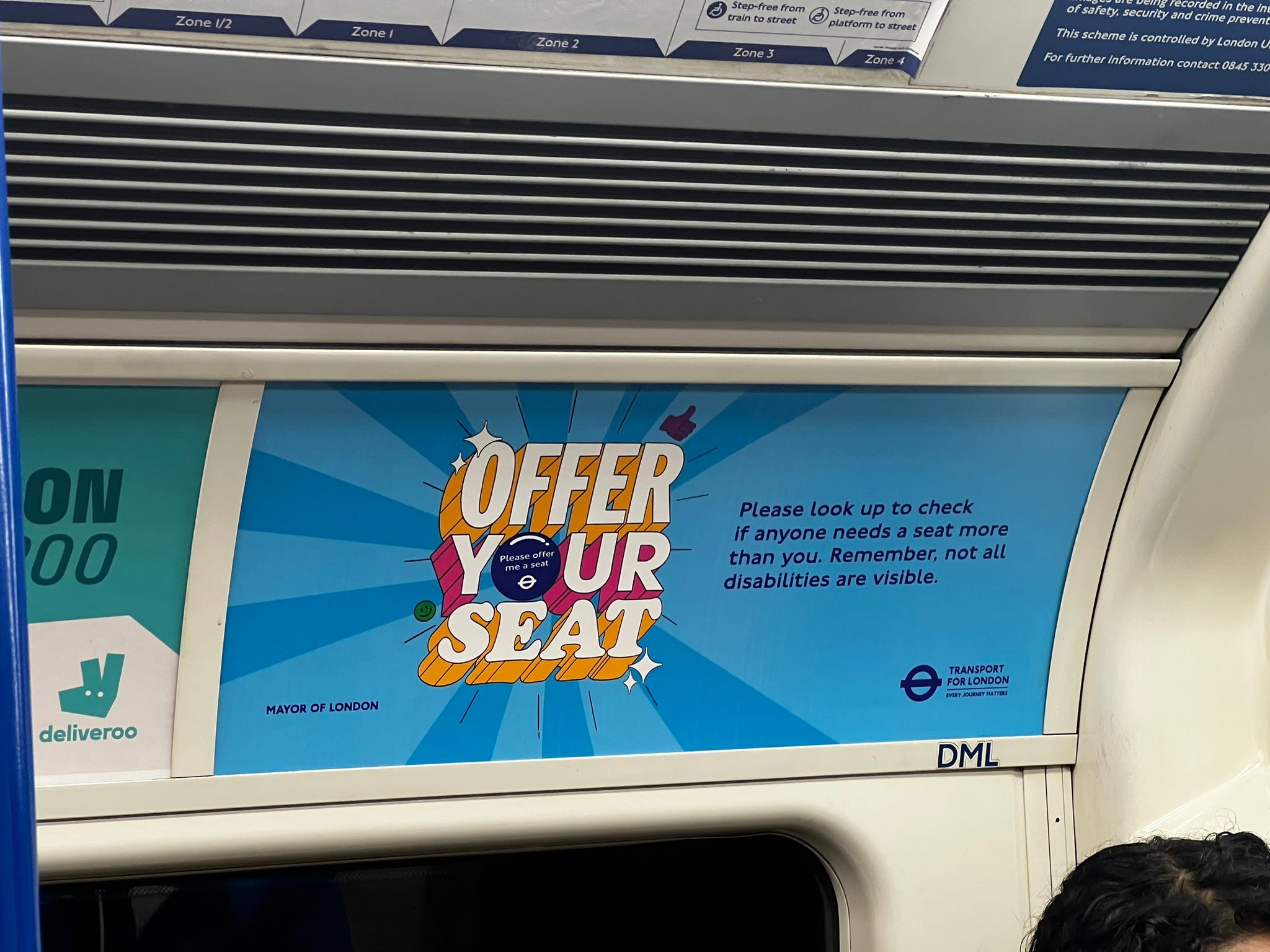
We shouldn’t assume that these dynamics are uniform across all highly-developed urban centers though. I have traveled through many of Germany’s major cities, including Berlin, without ever coming into contact with barriers or ticketing personnel. This is often described as an “honor system,” where riders can walk on and off trains without restriction, and must validate tickets themselves. This method is a progressive state-led effort to shift the relationship of trust between authorities and users, in a way that you don’t often find in the UK or the US. When traveling through Norway I noticed that Oslo’s transit agency Ruter had adopted a similar approach to Germany’s, doing away with turnstiles and gates and, in the words of Ruter’s payments lead Christian Fjaer, making a choice “to focus on customers who want to pay instead of keeping out the people who don’t.”
It’s fascinating that public transit systems are able to operate with such apparently lax fare collecting systems. There are accounts suggesting that the progressive approach works in Norway and Germany. Those who can pay generally do and it tends to benefit the agencies, which are able to cut compliance-related costs and don’t tend to see any significant spikes in fare evasion. Pricing in these countries has remained reasonably manageable, all things considered. Train pricing in the UK by contrast is notoriously high – a study in 2024 found that the UK train fares were the highest in Europe, without any corresponding increase in quality. While cities like Oslo, Berlin, and Frankfurt share the social trust dynamics typical of major globalized urban centers, their public transportation systems reflect a notably higher degree of generalized trust between authorities and users. Taking public transit in Oslo and German cities feels more like using a system that matches the quasi-anarchic flow of city life – it feels like these provisions are working with you and for you. Meanwhile, in London and New York, the flow of the crowd is literally blocked by physical barriers. While both permissive and restrictive models of public transit systems are functional, Norwegian and German passengers are tangibly more at ease when traveling.
Another element of experiential quality worth mentioning is the aesthetic experience of public transit systems. Underground networks are suboptimal in this respect. Most people generally prefer not to be holed up without sunlight. Aside from perceived safety issues, I think this was the reason why, on a trip to LA, so many people were visibly horrified when I told them I had been using the subway. How could I not be in a car, with shades on, moving at a snail’s pace through the West Coast traffic in the sun? Naples, with its Metrò dell’Arte initiative, found a classically Italian way of resolving this aesthetic problem by turning part of its underground metro line into what essentially functions as an art museum. You might be missing the lovely southern Italian sun, but at least you get to see sculpture and contemporary light displays.
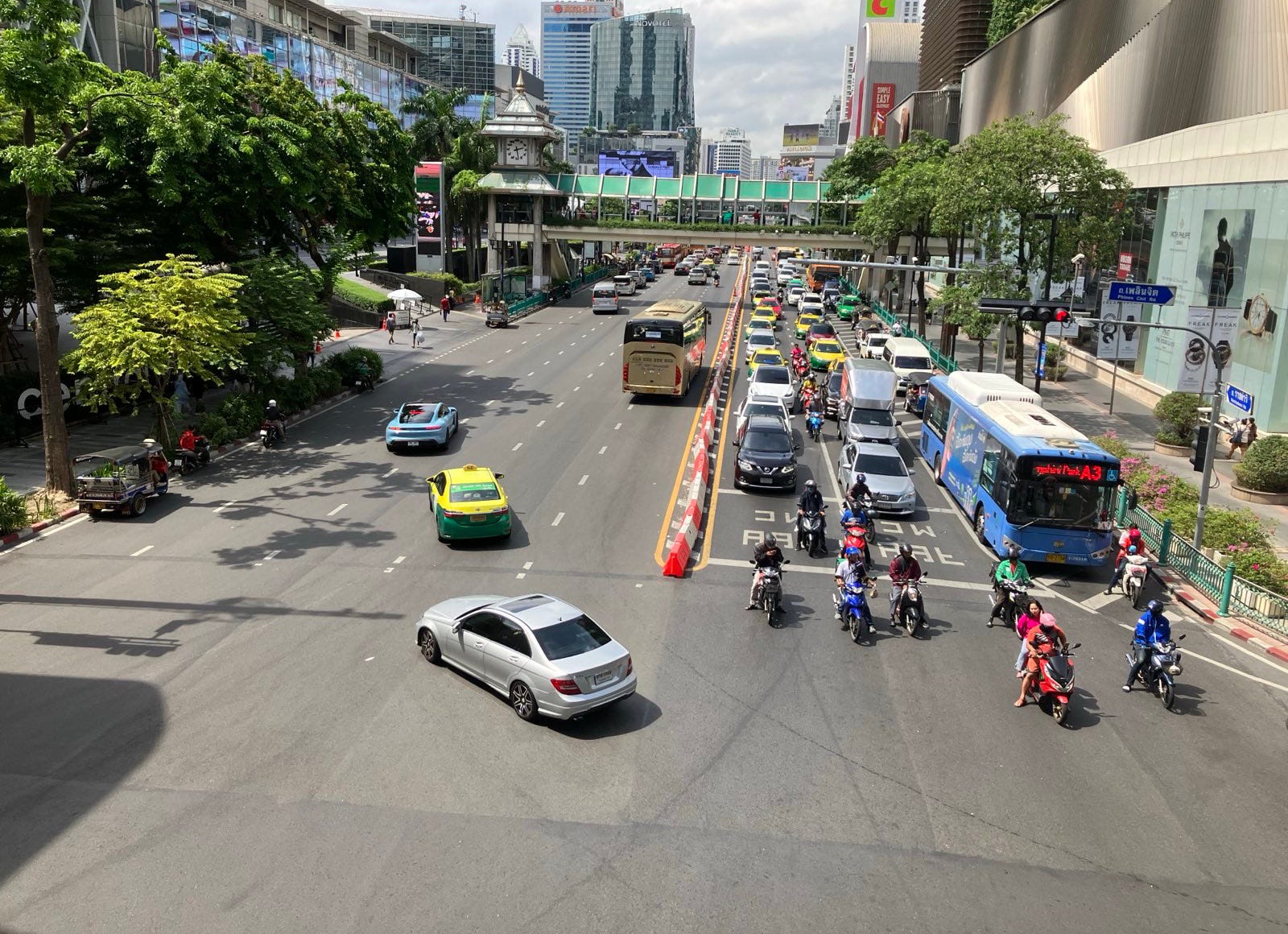
Above ground, there are transit systems that offer unique and otherwise inaccessible perspectives on the regions they serve. Bangkok’s BTS Skytrain offers an elevated and air-conditioned means of travel, above the city’s intense traffic. Aside from its convenience, a striking element of taking the Skytrain is the views of the city that it affords – panoramic scenes of Siam’s malls, sky bridges and glimpses of temple rooftops. And while it was mainly tourists that I saw enthralled by these views on my visit, it also wasn’t uncommon to see locals take a few snaps when the sun was setting over the city. The BTS Skytrain was inspired by Vancouver’s Skytrain, which itself hosts a very different but equally stunning aesthetic experience of winding through the city set against the North Shore mountains. I think such experiences also create a form of reverence for infrastructure, distinct from that which is afforded by civic pride in developmental progress.
These observations run contrary to theorist Marc Augé’s critique of “supermodernity”, in particular a kind of generic urban space – exemplified by airports and highways – which Augé characterizes as “non-places.” Non-places are dissociative spaces in which there can be no sense of belonging. Augé doesn’t claim that public transit is a totally meaningless experience, but argues that such spaces produce limited and private experiences, which are neither deeply embedded nor socially-binding. Indeed, traveling and commuting in areas with significant public transit infrastructure is often a solitary experience as, by their very nature, such systems function as means of “getting from A to B,” rather than offering an opportunity to build a sense of belonging specific to any one place. But, in a city such as Medellin, there are circumstances in which public transit can provide a genuine, shared sense of belonging, and encourage positive, socially cohesive behavior in its passengers. I also suspect there is at least a loose form of social-bind that comes from honor systems of travel, especially for those with an awareness that authorities in other similar countries often don’t adopt such trusting approaches to manage passenger behavior. Passengers who choose to validate their tickets – aware that authorities elsewhere rely on enforcement rather than trust – develop a kind of investment in the system’s legitimacy. This can manifest in informal self-policing, where fellow travelers feel genuinely motivated to behave the “right” way and to potentially challenge those who transgress, a dynamic that itself reinforces the communal character of the public transit system.
Bosnia is another place I’ve visited where the public-transit character seemed beyond the scope of Augé’s analysis. Its train systems trace their roots to Yugoslav Railways, a state-owned organization through which Yugoslavia carried out a significant expansion of the network following World War I, when the Austro-Hungarian Empire lost control of the region. Unfortunately, a significant amount of the system was destroyed during the Bosnian War in the 90s. During my time traveling through the region, I was warned by some locals in Mostar (famed for its “Stari Most”, an Ottoman old bridge) that while the trains heading north were decent, flooding from the previous year had created ongoing problems with the railways. As I traveled from Mostar up to Konjic by train, taking in the fantastic views of the deep blue Neretva river, these warnings slipped from my mind. Until the train suddenly came to a halt. Eventually the train driver announced that there was a technical issue with the wheels which would detain us for some time.
After a lengthy wait, the driver reported that the issue couldn’t be fixed and so we’d need to get onto another train. All passengers were escorted off onto the tracks, being guided towards a nearby platform. Before we reached the platform, the conductor (who I think played the dual role of mechanic) came running along, out of breath. Waving his arms, he told us that everything was fixed and we should quickly get back on. The frustrations that had built up amongst the passengers quickly dissipated at this comical scenario. When we reboarded, a group of Bosnian women who had met and started chatting during the delay were riotously laughing. One of the ladies humored us curious tourists by saying, “Welcome to Bosnia, where things break but we can fix them up eventually.”
I later learned, at a museum in Sarajevo, about “snadi se,” a commonly used phrase from the former Yugoslav times which describes the practice of making do and improvising. The archetypal example of this mindset is found in the Yugo, a type of car which was widely used in the region but broke down so often that a subculture of repair developed around it, with many families having their own versions of a repaired Yugo car. I think those ladies found traces of this sentiment in our train journey. So while Augé’s analysis is, in many respects, difficult to argue with, perhaps we needn’t decry public transit systems as non-spaces. With a little “snadi se” we can most certainly find a bit of regional character in them.
The New Nature Thesis
Presented as an easily digestible summary of a recent talk, read Venkatesh Rao unpacking the big idea shaping the Protocol Institute’s research mission – AI and protocols, entangled at planetary scale.


In Holland, i once discovered i had forgotten to pay the fare on a trolley. When approached, the officials in charge of fares showed great difficulty & confusion in collecting money for a trip already taken. the locals felt I should let it pass.
i guess they became so customer-facing they could not deal with migration between the "don't pay" and "do pay" groups