



When Janice Spurlock designed the Concord Settlement she conceived of the hole first.
She sat at the cedar desk that had been her father’s and put down on paper the dimensions of a pit large enough to hold every building, every tool, every record, and every yard of linen the settlement would ever produce. She designed a grave before she had anything to bury. Then she designed the village.
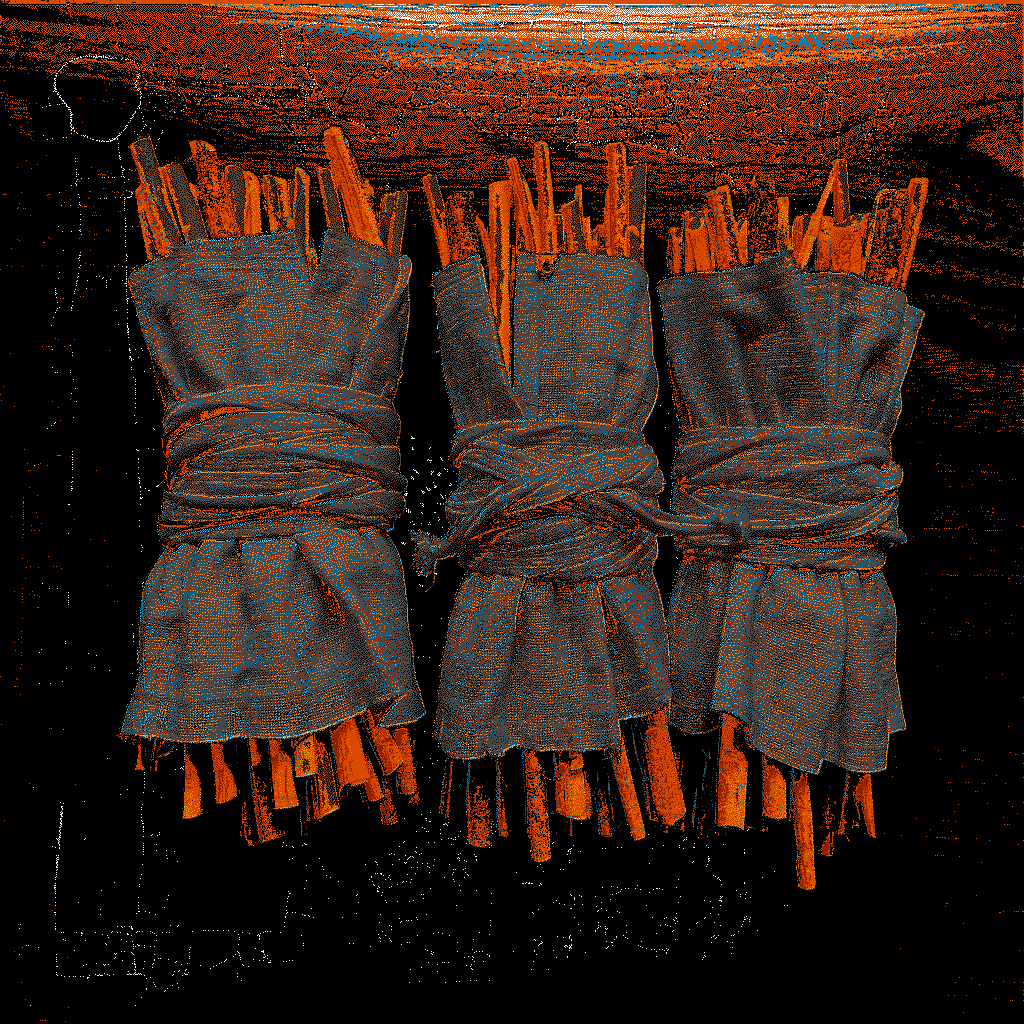
She constructed the houses out of the ground they would stand on. Rammed earth, lime, river sand, straw from the first flax. Walls you could put your fist through after a year of neglect and a season of rain. She made the roofs to lift and the floors to turn. Nothing in the Concord was joined that could not be unjoined in one night by people working in the dark. Even the famous linen, the linen the outside world paid for, was woven on looms pegged together, so that a loom at the end of its life was a heap of clean sticks, a length of cloth, and nothing a museum would want.
People assumed she had built this way to be thrifty, or to be holy, or because the ground was what she had to work with. She built this way because she had read the tea leaves of her own century and did not trust it. A settlement that worked, that fed itself and asked for nothing and frightened no one, would in time be studied, then admired, then improved, then governed, then sold. She had watched it happen to the Big Man, who began as a useful lie and became, inside of nine years, a thing with opinions she had not given him and a temper she could no longer fully predict. She did not intend to watch it happen to the Concord. She intended the Concord to be able to stop.
So she wrote the doctrine, and the doctrine said: two.
A single failure could be chance. Two failures close together were a verdict. The settlement would not be undone for a single bad harvest, or a single death, because bad harvests and hard deaths come to every place and mean nothing on their own.
It would be undone only when two things failed in the same season: when the ground stopped producing and the people stopped trusting it. That was the line. Past it, a place was no longer living. It was only still standing.
The first failure was the flax.
The ground had never been rich. That was the secret of the place, the thing the linen buyers were paying for without knowing they paid for it. The Concord stood on poor land, thin and sour. The kind no one had fought her for, which was the only reason she had been allowed to claim it. What made it answer was the consecration. There was a protocol for it, run every season since the founding, the spent earth lifted and turned and cleaned in the great iron boilers and fed and worked and blessed back into ground that would carry flax taller and finer and faster than flax has any business growing, and the linen it made was the reason anyone outside had ever heard the word Concord. The fertility was not in the soil. It was in the doing. The soil held only what the consecration put into it, the way a page holds only what a hand writes on it.
The failure did not look like failure. The consecration that last spring was performed exactly as it always had been, on the schedule, by the right hands, and the plants came up as green as a painting. You could have hung the field above a mantel. But the ground had stopped taking the blessing. It accepted the work and gave back nothing. Just dust holding the shape of soil. The plants were standing out of habit. They would stand a while longer and then they would lie down all at once, and the consecration that had carried the ground for 40 years would not carry it one more season.
The second failure was the boy, but when you looked at it long enough it was the first failure repeated in other clothes.
The Stewards took no spouses and made no children of their own bodies. This was not a hardship they spoke of. It was the discipline the whole place was balanced on, the reason the Concord could stay soft, could go a generation without a raised fist, because nothing in it ran on the old engines of blood and inheritance and who would get the land. A place that does not breed does not quarrel over breeding. But a place that does not breed does not last either, and Janice had known it when she sized the grave.
Her answer was to bring the world in from outside. A good captain went across the water with a list and came back with the broken and the hopeful, people glad to leave whatever they were leaving, and the Concord took them in, and raised their children in their ways until the Concord was the only country those children had.
Aldred was one of those children. No Steward had made him. The Stewards had raised him so wholly inside the calm that by 20 he had never once learned where his own body ended, because nothing in the Concord had ever pushed back on him hard enough to teach him. He had been kept too safe to know his own size. You learn your size from other rough bodies when you are six, and there were no rough bodies in the Concord, by design, until the import brought them.
There was a night of cider the village was not supposed to have had, carried over by the outside people, who brought the rough world in with them the way you bring weather in on your coat.
There was a game that got loud, the kind the imported children had played their whole lives and the Concord children had never played at all. A length of firewood swung in fun. A large, gentle man, himself brought in from outside, caught the wood in one hand to stop it, because stopping things was the only kind of strength he had ever consented to use. Aldred, frightened to find for the first time in his life that another person was stronger than he was, snatched the wood back. And the gentle man, who did not hold on to anything that someone else wanted, let it go. The boy went over the lip of the gulch.
The thing the Concord did to stay alive was the thing that killed the child it had raised.
The Stewards did not arrest anyone. They hadn’t built a place that could arrest. Linnea, who kept the categories, sat at the long tables for three months turning the death over in her small book, and could not find the box it went in, because it did not belong to the inside or to the outside but to the seam between them, and the Concord had no category for its own seam.
So the verdict was complete. The ground had stopped answering. The people had stopped trusting it. Two failures, one season. Janice, now an old woman, read her own doctrine back to herself at the cedar desk and found that it still held, which is the cruelest thing a good rule can do.
They began on a night with no moon, just the way the doctrine said.
There was a supper first. The manual called for it, though this surprised people who had only read the manual and not known the woman who wrote it. Alcohol had been forbidden among the Stewards for as long as anyone could remember. But Janice had laid down a few bottles years before against exactly this evening, in a cellar nobody else knew about. When they were opened the wine had gone the pale gold of a thing kept too long and was the better for it.
They ate at the long tables in the dining hall. Someone made a toast, and it was not sad. They drank to the work, which had been real, and to the linen, which had been real, and to the boy. Then they put down the glasses and went out into the dark and took the place apart.
The dismantling went the way she had intended it to go. The roofs came off in single pieces. The looms came down to sticks. The walls, built from the very dirt they stood on, were simply returned to the field. They plowed the houses under and harrowed the streets and walked the seed of next year’s volunteer grass across the whole of it by hand.
Then they came to the burial trench. The chamber Janice had drawn before anything else, the grave she had sized to hold the whole settlement, dug now to the exact dimensions on the page and waiting at the center of the lot. The records, the tools, and the good linen they could not carry and would not sell, and the bad linen with the dropped stitches, and the toys, and the bottles, and the looms, and the doors all went into that hole. The hole held it all perfectly. Of course it did.
Everything that had been the Concord fit into the space Janice had planned for it before it existed.
They covered it. They tamped the earth flat and drew the sod back over the seam. By the gray hour before light, where there had been a town there was now a meadow sloping gently to the gulch.
There were three things the hole could not take.
The first was the boy, who was already in the ground, on the far side of the lot. You can dismantle a settlement. You cannot dismantle a death. They left him where he was and did not mark him.
The second was the Big Man.
A giant in the high timber who had taught them the work and left them the land, a story every soul in the Concord had been raised on. But you cannot put a giant in a hole. He had no body to plow under, no boards, no doors. He had only ever lived in the mouths of the people who told him to one another, and the one way to take down a thing that lives in mouths is to close them. So they closed them as best they could.
The third was the Travelers.
They were the people the captain had carried in over the years, the broken and the hopeful from across the water, brought to keep alive this place that could not keep itself alive. They had done the work and eaten at the long tables and raised their children in the manners, and still they had never quite become the Concord. They kept their own things to the end. The cider under the benches, the market, the saints’ days the Stewards pretended not to see. When the dismantling came there was nothing to be done with them, because the hole was for the Concord, and because in any case you cannot put living people in a hole. So they did the only thing left. They went back out the way they had come in, scattered across the water into the world they had been pulled from, each of them carrying a piece of the Concord in his body.
A few stayed, the ones with nowhere left to go. The woods have kept them.
At first light the surveyor walked the meadow, as the instructions required, to confirm that nothing remained. Nothing did. The doctrine had promised as much, and the grass was clean. Somewhere on that walk the surveyor set a glove down to do something that needed both hands, and did not pick it up again. They went down to the boat. The boat went out. That was the Concord.
Dee Dee came out of the trees after the boat was gone. He crossed the cut ground and stood a while where the sewing shop used to stand, or near it; there was no telling now. In the grass he found the glove and did with it what people have always done with a dropped glove. The thing Cathy did and her mother before her. He looked for somewhere to set it high, where whoever lost it might come back and find it. He found a branch, worked the glove down over the end of it, and stuck it in the ground at the edge of the woods, so it could be seen. Then he went back in.
Captain Hosmer came in off the water some months later with 30 people in the hold, all of them expecting the Concord to be there when they landed. He had been across the water on a recruiting run, as he had a dozen times before, talking the curious onto his ship with the old promises, a place where a man need not fear his neighbor and so on.
He overshot the landing. He had always come up the channel on the roofline, and there was no roofline, and he was past the place before he understood he had been looking at it. Just grass, all the way to the trees.
He went ashore ahead of the others and called out, the way you call into a house you already know is empty. The grass took the sound. Then he looked for some sign of what had happened. A burned beam. A caved roof. A grave, even. Any wreck or ruin at all, because even the worst story is an answer, and he wanted one to carry back to the boat. There was none. No sign of distress anywhere on the lot, which should have been a comfort and was not. He had nothing to show them, but he walked them ashore anyway, the whole tired line of them, while he worked out what to do.
They came up into the empty field and wandered. Eventually someone stopped, and looked at the one thing standing in it, and soon they were all gathered around a single glove at the edge of the woods. It was set up on a stick, and the grass at the foot of the stick was pressed down in a thin path that ran back into the trees, as if somebody came out now and then to see to it. Nobody followed the path.
The wind was working the glove, and it seemed to be waving. At them, or at no one. Hello, or goodbye.
They did not stay. There was nothing to stay for, and Hosmer had a load of people to carry on to wherever would have them.
When the others had gone down, one of them lingered behind and took something from a pocket, set it in the grass at the foot of the stick, then went down after the rest. No one recorded what it was.

The 2026 Protocol Symposium — themed New Nature — is happening online from September 21–25, 2026.
Didn’t secure a spot for the main symposium talks? Join the waitlist or subscribe to the Protocol Institute YouTube channel to catch livestreamed sessions.
There are still spots available in the event’s accompanying workshops.